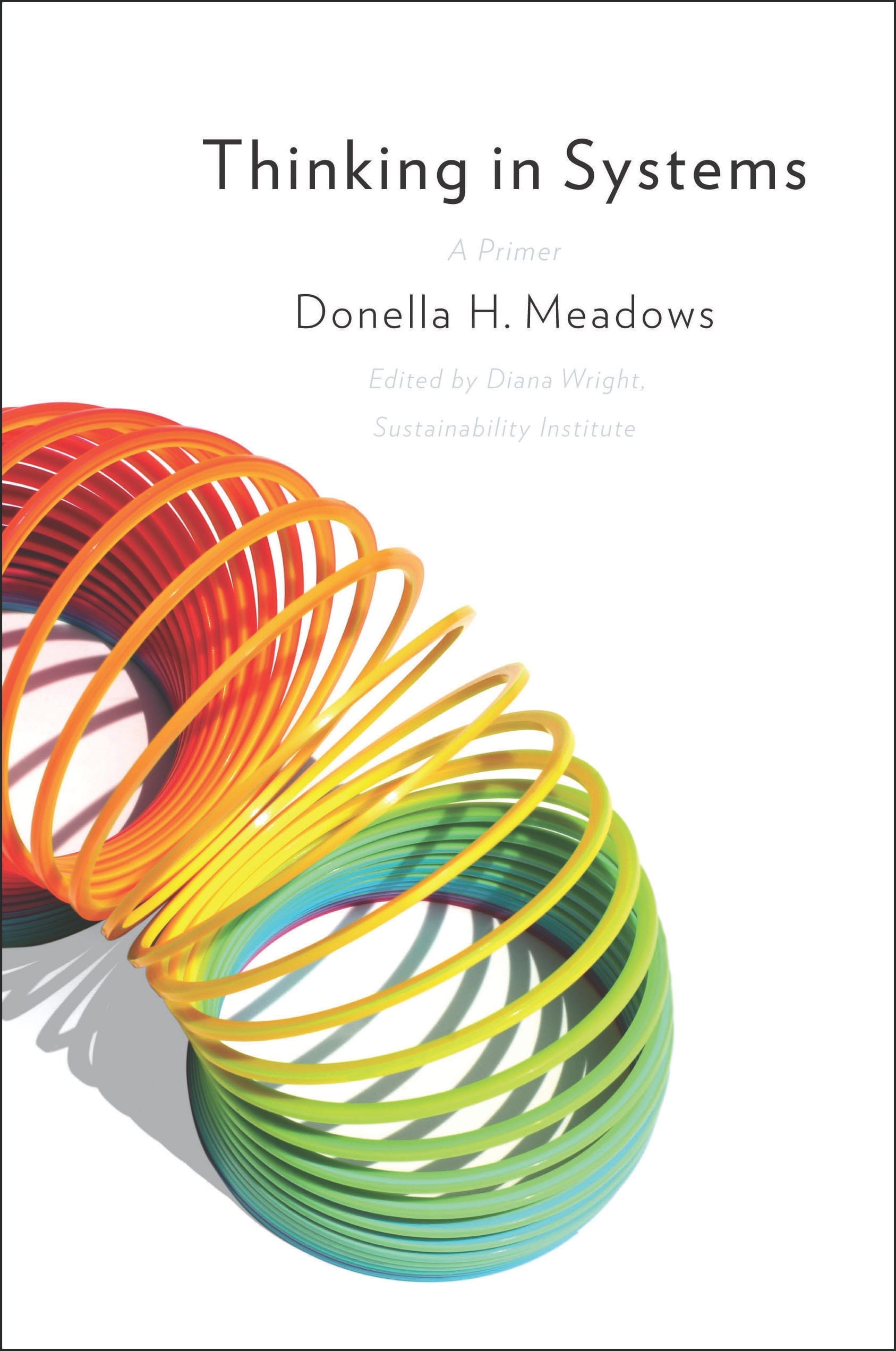
Thinking in Systems: A Primer, by Donella Meadows
Around 1981, when I started thinking about doing something with computers, there were two paths on the educational side. You could be a programmer, or you could be a systems analyst.
It was not clear the difference between both. Some disdained the programmer as a lesser citizen, and considered a system analyst as a programmer so good as an orchestra director compared with a musician. To me it didn't make too much sense and decided to learn programming on my own, but when I started having clients, presenting myself as a system analyst increased the amount of the invoices paid, then an SA I became.
Interesting enough, the first book I read about computers was not on programming but on system analysis. I don't remember the title, or the author, and the content was vague and of little value from my early point of view. And the professional SAs that I met were more on the side of what today are called Business Analysts, who get a deep idea of what the client is trying to do, and is able to talk with a programmer to see how that can be achieved. I have great respect for the BAs, it is not an easy job.
However, the SA line of work was always too fuzzy to me. I noticed some things in control systems, and some things on ecology, but generally, it was more like a bunch of ideas without a clear case.
Somehow I landed on this book some time ago. It is not a new one, and I wish I found the author thirty years ago. It changed my mindset to see system analysis as a guided approach to understand a complex situation, and I can always use that.
The book starts with established patterns known with reasonable certainty, later it goes into more complex cases and present how you can apply systems thinking to them, and finally present the findings of the author after many projects and years of work, and what she consider the best approaches that you can take on each situation. I find that I can apply that last part each day, with good benefit for me.
After finishing the book, I decided to study it formally, because there is a lot if good information there that I want to remember. The broad lines are clear and memorable, but the particular cases are excellent to have in memory all the time, and memory is something that I need to train.
I am recommending this book to my friends, on any discipline.